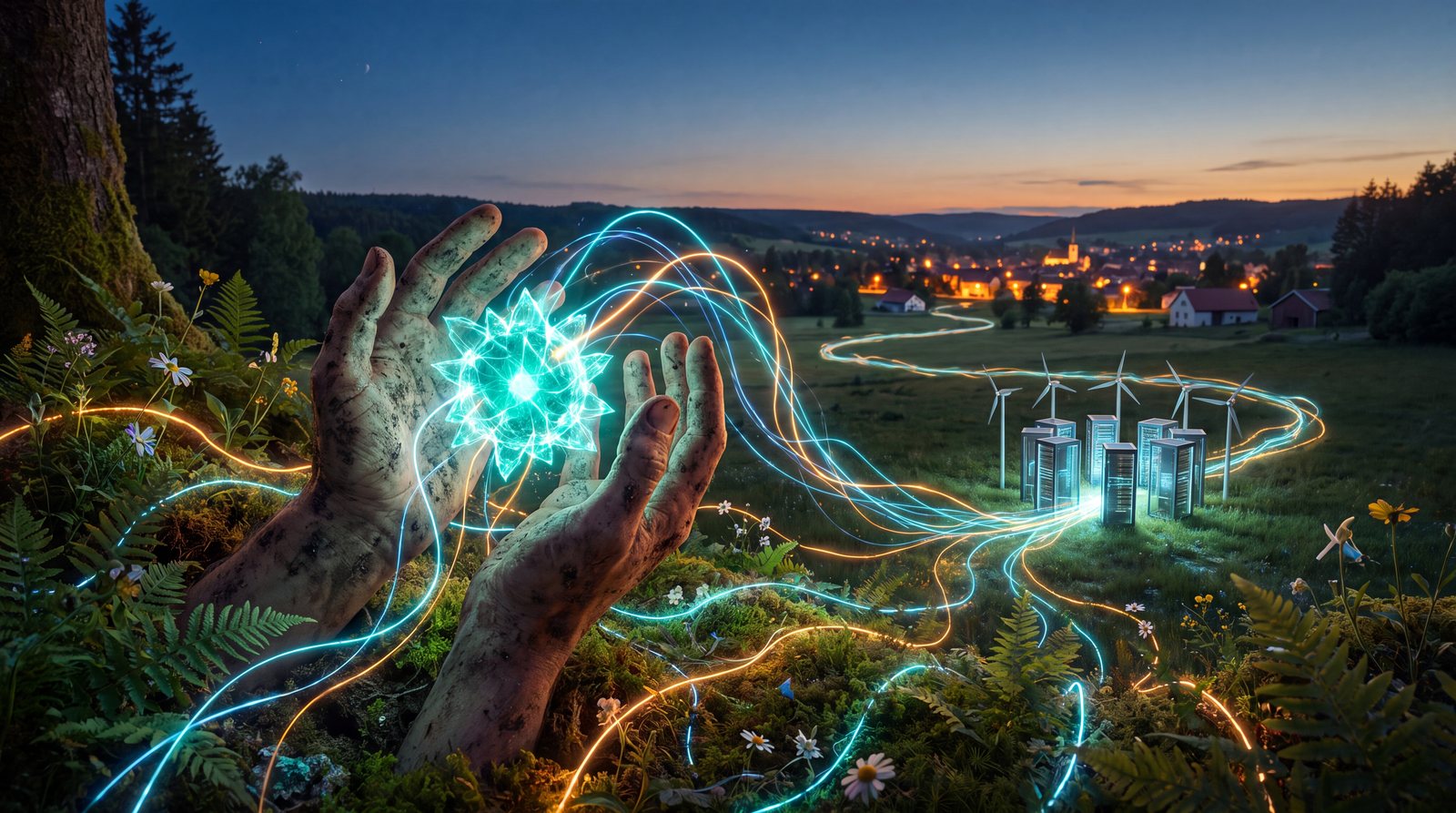
The AI boom is electrifying U.S. innovation—and the power grid. Data centers are now the biggest driver of electricity demand, overtaking residential power use for the first time in history. But all this innovation comes with a cost: record-breaking power consumption that's stressing grids and raising questions about sustainability.
Both True · edition
AI's Energy Appetite Is Reshaping Power Grids

The lead
STRAIGHT TALK
AI Pushes U.S. Electricity Demand to Historic Highs
U.S. electricity consumption reached a record 4,195 billion kilowatt-hours in 2025 and is projected to climb further to 4,399 billion kilowatt-hours by 2027, according to the EIA. Data center demand, driven by AI infrastructure, is forecast to more than double from 31 GW in 2025 to 66 GW in 2027. The commercial sector, led by data centers, is now the nation's largest power consumer, overtaking residential use for the first time. (Source: Yahoo Finance) →
The case for
The rise in electricity demand reflects a historic shift in the U.S. economy toward data-driven industries. AI-powered data centers are not just consuming power—they're driving innovation across sectors, from healthcare to logistics. Goldman Sachs projects a doubling of data center load in just two years, which underscores the rapid integration of AI into critical infrastructure. As the commercial sector becomes the largest power consumer, it signifies a pivot to a more digitized, service-oriented economy. Meanwhile, the energy mix is also evolving: renewable sources like solar are gaining ground, as evidenced by solar overtaking coal for the first time in May 2026. This transition offers an opportunity for the U.S. to modernize its grid, integrate smarter energy systems, and potentially reduce reliance on fossil fuels in the long term. AI is not just a driver of consumption; it is also a tool for optimizing energy efficiency, from dynamic load balancing in grids to predictive maintenance in power plants.
The cost
The energy demands of AI are straining a grid already grappling with climate shocks and aging infrastructure. Data centers alone will account for 8.5% of peak summer power demand by 2027, doubling their share from 2025. This surge risks driving up electricity prices for residential and industrial users, exacerbating inequality. Natural gas, which will still supply 40% of electricity in 2027, keeps the U.S. tied to a fuel with volatile prices and significant carbon emissions. While renewables are growing, they're not yet scaling fast enough to offset the environmental impact of this demand spike. Moreover, the energy-intensive nature of AI raises ethical questions: How much power should go toward training large language models versus meeting basic societal needs? The cost isn't just environmental; it's also political, as public opposition to data centers grows amid rising electricity bills and local concerns about land and water use.
Terms, plainly
- Data Center Load
- The amount of electricity used by facilities that house servers and computing infrastructure for processing data.
- Kilowatt-Hour (kWh)
- A unit of energy equal to one kilowatt of power used for one hour, commonly used to measure electricity consumption.
- Natural Gas
- A fossil fuel used for electricity generation, heating, and as an industrial energy source.
- Renewable Energy
- Energy derived from natural sources like sunlight or wind that are replenished on a human timescale.
Context
For decades, U.S. electricity demand was stagnant, but the past few years have reversed that trend, largely due to AI and electrification. The commercial sector's rise to the top of power consumption marks a turning point, as data centers become central to the economy. However, this growth parallels increasing concerns about grid reliability and sustainability. New York's recent moratorium on large-scale data centers highlights the tensions between economic and environmental priorities. Going forward, policymakers will need to balance the benefits of AI-driven growth with the need for sustainable energy solutions, especially as climate risks intensify.
Both true
AI's energy appetite is a double-edged sword. On one hand, it's propelling industries forward and accelerating the shift to renewables. On the other, it's placing unprecedented strain on grids and reinforcing reliance on fossil fuels. The question isn't whether AI is worth the energy—it’s how we manage this transition without leaving behind communities, ecosystems, or future generations. Both true, and both urgent.
Also today
HUMAN IMPACT
Teens Are Turning to AI Chatbots for Mental Health Support
When teenagers experience emotional distress, more of them are turning to AI chatbots instead of friends, parents, or counselors. The trend raises questions about the role of technology in mental health support. (Source: 10TV) →
Why it mattersAI is increasingly shaping how young people seek and receive emotional support.
TECH & PLANET
New York Imposes Moratorium on Hyperscale Data Centers
New York Governor Kathy Hochul signed an executive order banning the construction of large-scale data centers using 50 megawatts or more of power for one year. The move responds to public concerns about electricity costs and AI's environmental impact. (Source: CNBC) →
Why it mattersThis sets a precedent for balancing AI infrastructure with sustainability concerns.
FRONTIER
Insilico and Bora Partner on AI-Driven Drug Development
Insilico Medicine and Bora Pharmaceuticals announced a strategic alliance aimed at integrating AI into drug discovery and manufacturing, with a potential value exceeding $2.5 billion. The partnership will focus on AI-enabled approaches to pharmaceutical development and quality systems. (Source: Insilico Medicine) →
Why it mattersAI is revolutionizing drug development, promising faster and more efficient healthcare solutions.
My analysis
The bigger picture
AI's growth is reshaping industries, power grids, and even mental health care. But with innovation comes strain—on energy systems, public trust, and the environment.
What it means for you
- The AI boom is driving U.S. electricity demand to historic highs, led by data centers.
- Renewable energy is growing but not fast enough to offset fossil fuel reliance.
- New York's data center moratorium reflects rising public concern over AI's environmental costs.
- AI chatbots are becoming a go-to resource for teens in emotional distress.
- AI partnerships are accelerating innovation in healthcare and drug development.
Growth and strain, innovation and cost—AI keeps pulling every thread tighter.
Sources
- Yahoo Finance — https://finance.yahoo.com/energy/articles/ai-boom-sends-u-electricity-220000087.html
- 10TV — https://www.10tv.com/article/news/nation-world/more-teens-use-ai-chatbots-mental-health-support-heres-what-parents-need-to-know/507-4583de74-0498-420c-b707-9dc6ec25c217
- CNBC — https://www.cnbc.com/2026/07/14/new-york-ai-data-center-ban.html
- Insilico Medicine — https://insilico.com/news/xa31uheux1-insilico-medicine-and-bora-pharmaceutica