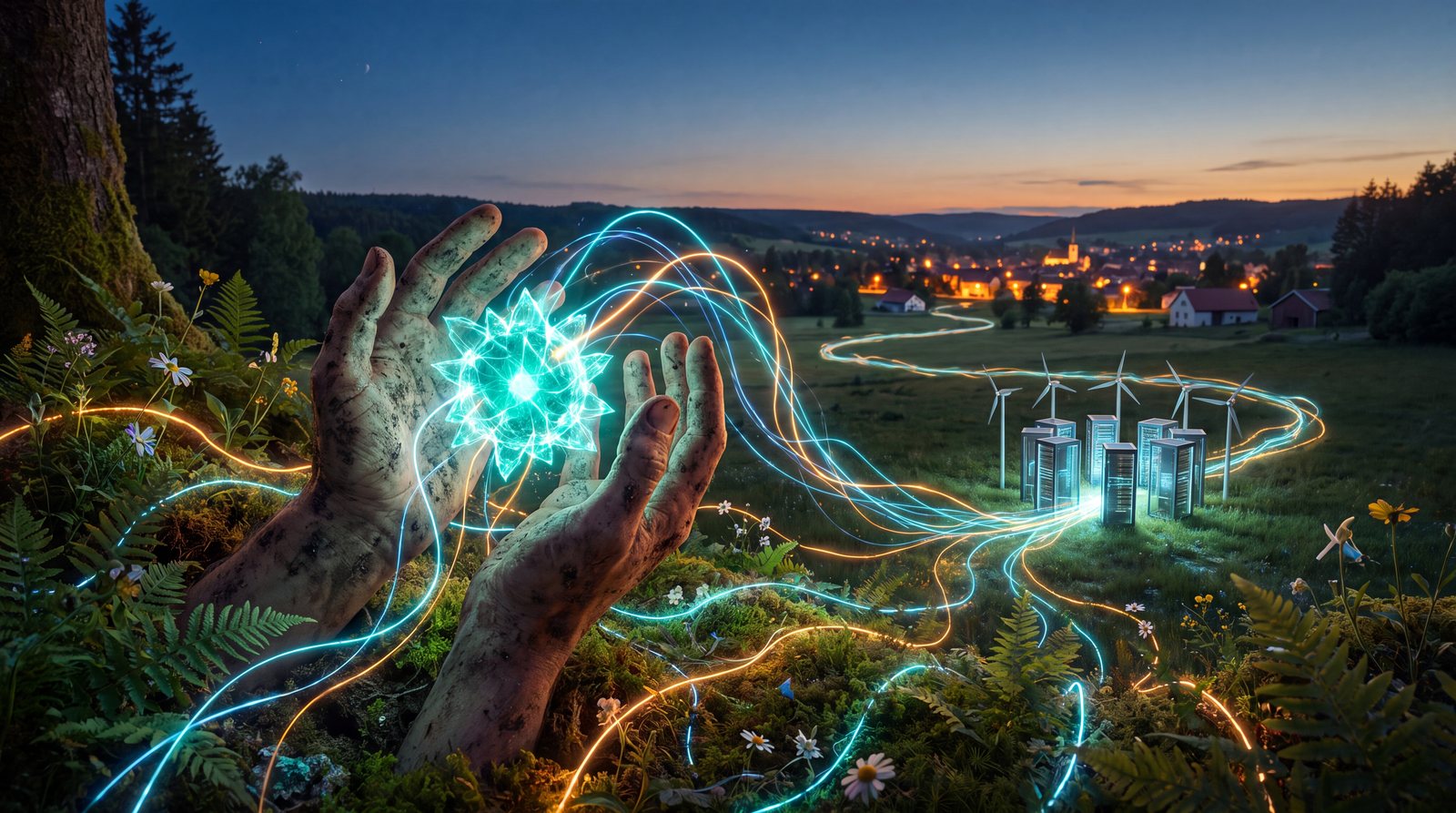
AI innovation often paints a rosy picture of a tech-driven future. But every watt of power has to come from somewhere, and the grid isn't ready. Today, we're looking at the energy strain AI data centers are placing on U.S. utilities—and why this matters more than just keeping the lights on.
Both True · edition
AI's Energy Hunger is Breaking the Grid

The lead
STRAIGHT TALK
AI Data Centers Will Overload U.S. Utilities by 2030
Data center demand will outpace planned utility capacity additions by more than 100 GW through 2030, increasing reliance on on-site gas generation and other stopgap measures. (Source: Utility Dive) →
The case for
AI-driven data centers are the backbone of modern technological advancement, powering everything from generative AI tools to real-time analytics. The projection of a 100 GW shortfall by 2030 underscores just how explosive this growth is. While this demand strain sounds daunting, it could serve as a catalyst for overdue innovation in the energy sector. Renewables like solar and wind are increasingly cost-competitive, and AI itself promises to optimize energy consumption at these centers. Additionally, the rise of on-site energy generation, if paired with clean energy technologies, could decentralize power production and reduce transmission losses. This crisis might just force utilities, regulators, and tech companies to prioritize grid modernization, smart energy storage solutions, and renewable integration—steps that have been dragging for years. If handled correctly, this could accelerate the shift to a greener, smarter, and more resilient energy infrastructure.
The cost
But let's not sugarcoat it: this transition won't come cheap or easy. The gap between existing utility plans and AI-driven demand is not a simple fix. On-site generation, if reliant on gas or other fossil fuels, risks locking in decades of carbon emissions just as the push for decarbonization ramps up. Even renewable integration has its limits without massive investments in grid storage and transmission upgrades. And then there's the financial burden—who pays for retrofitting a grid that wasn't designed with AI in mind? Utilities? Data center operators? Taxpayers? Energy transitions also take time, and the 2030 clock is ticking. Without coordinated action, we’re looking at potential energy shortages, higher electricity costs, and a patchwork of temporary fixes that do more harm than good in the long run.
Terms, plainly
- On-site gas generation
- Small-scale power plants located near facilities, often using natural gas to meet immediate energy needs.
- 100 GW
- 100 gigawatts is a measure of power capacity, roughly equivalent to the peak energy demand of 50 million homes.
- Grid modernization
- Upgrading the electricity network to handle new demands like renewable energy and increased consumption.
Context
The energy strain from data centers isn’t new, but AI and machine learning have pushed it into overdrive. Cloud giants like Google and Amazon have already faced scrutiny over their energy use, and commitments to renewable energy purchases have only partially mitigated concerns. Meanwhile, the broader U.S. grid faces aging infrastructure, inconsistent renewable adoption, and regional disparities in generation capacity. As AI expands into industries like healthcare and transportation, the energy demands won’t just stay in Silicon Valley—they’ll ripple across the entire economy. The question now is whether this strain forces innovation or systemic cracks.
Both true
AI is driving incredible advances, but it’s also forcing us to confront the hidden costs of digital growth. A 100 GW shortfall isn’t just a technical challenge; it’s a societal one. The solutions are there—renewables, storage, smarter grids—but they require coordinated effort and investment. The tension is clear: innovation vs. infrastructure. Both true.
Also today
HUMAN IMPACT
84% Of Students Use AI, But Most Schools Lack Rules
84% of high school students surveyed in 2025 said they used generative AI for schoolwork, but only 3 in 10 schools have rules for its use. A study also found AI-detection software misfires as often as it works, leaving teachers uncertain about academic integrity. (Source: Fortune) →
Why it mattersAI's role in education is outpacing our ability to govern it, raising big questions about learning and fairness.
TECH & PLANET
Big Tech’s Nuclear Power Push Falls Short
In 2025, 8.8% of global electricity came from nuclear power, down from 30 years ago. Despite agreements like Google and Kairos Power’s advanced nuclear projects, experts warn this won’t meet data center energy needs in the short term. (Source: Bulletin of the Atomic Scientists) →
Why it mattersThe hype around nuclear as a tech savior distracts from immediate, scalable solutions for energy demand.
FRONTIER
New Initiative Aims To Boost U.S. Drone Manufacturing
Carnegie Mellon, Carnegie Foundry, and U.S. drone manufacturers launched a $50 million initiative to scale America’s drone production through robotics and automation. The announcement was made on July 15, 2026. (Source: Carnegie Mellon University) →
Why it mattersStrengthening domestic drone production aligns with national security and economic goals in a competitive global market.

My analysis
The bigger picture
AI is a growth engine, but it’s also a resource hog. From energy grids to education systems, the pace of AI adoption is testing the limits of infrastructure built for a slower time.
What it means for you
- AI data center demand will exceed utility capacity by 100 GW by 2030.
- Only 3 in 10 schools have rules for AI use, despite widespread adoption by students.
- Nuclear power isn’t a short-term fix for Big Tech’s energy needs.
- U.S. drone manufacturing is getting a $50M boost from Carnegie Mellon and partners.
- AI’s rapid growth exposes gaps in energy, education, and manufacturing readiness.
Tomorrow’s AI breakthroughs depend on solving today’s infrastructure gaps.
Sources
- Utility Dive — https://www.utilitydive.com/news/ai-data-center-growth-utilities-generation-plans/825541/
- Fortune — https://fortune.com/2026/07/16/school-ai-policy-detection-tools-failing/
- Bulletin of the Atomic Scientists — https://thebulletin.org/2026/07/data-centers-powered-by-next-gen-nuclear-dont-fall-for-big-techs-pr-hype/
- Carnegie Mellon University — https://www.cmu.edu/news/stories/archives/2026/july/carnegie-foundry-carnegie-mellon-and-american-drone-manufacturers-launch-initiative-to-supercharge